After heavy rain, you might notice pools of water sitting on your flat roof rather than draining away immediately. A small amount of water shortly after rainfall isn't necessarily a cause for concern, but water that regularly remains for long periods can indicate a problem with the roof or its drainage.
Known as ponding water, this is a common issue with flat roofs. Understanding why it happens can help you prevent premature deterioration and potential leaks.
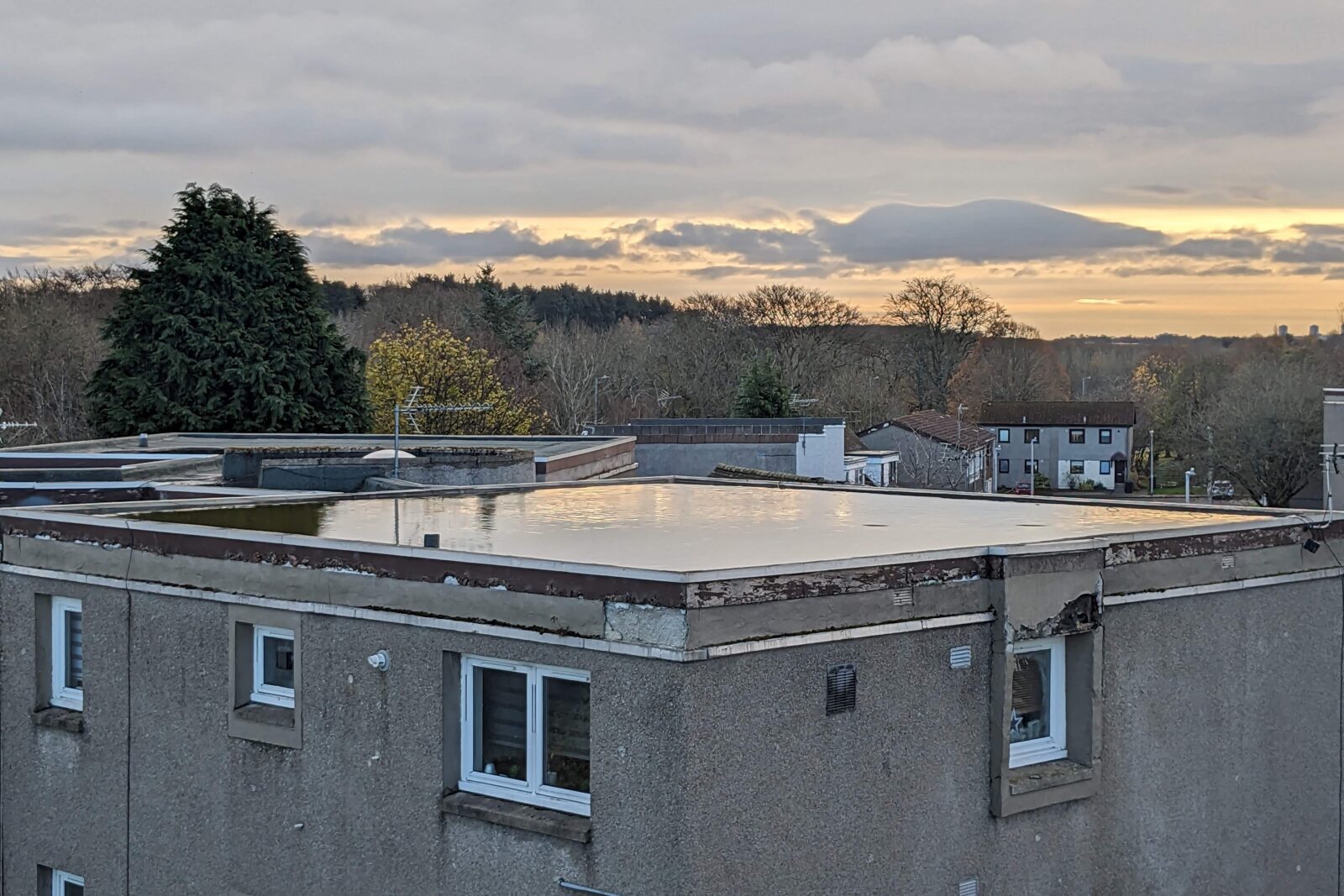

Despite the name, a flat roof shouldn't actually be completely flat. It should be constructed with a slight fall that encourages rainwater to flow towards gutters, outlets or other drainage points.
If the fall is inadequate, or the roof has changed shape over time, water can settle in low points rather than draining away.
Modern flat roofing systems, including EPDM rubber roofing and single ply roofing, are designed to cope with exposure to the elements, but good drainage is still an important part of the overall roof design.
Sometimes the roofing material isn't the problem at all.
Leaves, moss, dirt and other debris can accumulate around outlets and gutters, preventing water from leaving the roof efficiently. This is particularly common on London properties surrounded by trees.
Regularly clearing drainage points can help prevent water from backing up onto the roof.
Flat roof standing water can also develop when part of the roof structure begins to sag. This creates a low point where water naturally collects.
Sagging can have several causes, from problems with the supporting structure to deterioration caused by previous water ingress. The additional weight of standing water can then place even more stress on the affected area, so noticeable changes in the roof's shape should be professionally investigated.
If ponding has been a problem since the roof was installed, the original design or installation may be responsible.
The roof may not have been constructed with sufficient fall, or drainage outlets may have been positioned incorrectly. Simply replacing the waterproof covering won't necessarily solve the problem if the underlying roof design still prevents water from draining effectively.
Ponding doesn't automatically mean that your flat roof will leak. A correctly installed roofing membrane should provide effective waterproofing.
However, persistent standing water can expose weaknesses in an ageing or damaged roof. Cracks, failed seams, punctures and poorly sealed edges become particularly vulnerable when they're continuously exposed to moisture.
Water that remains for long periods can also encourage moss, algae and debris to accumulate.
The right solution depends on what's causing it. Clearing a blocked outlet may be all that's required in some cases. Elsewhere, repairs to the roof covering, drainage improvements or work to correct the roof's fall may be necessary.
Avoid simply assuming that a puddle means the entire flat roof needs replacing. A professional inspection can establish whether the issue is drainage, structural movement, damage to the membrane or a combination of factors.
If water regularly remains on your flat roof after the rest of the property has dried, our team can inspect the roof, identify the cause and recommend the most appropriate repair or drainage solution.