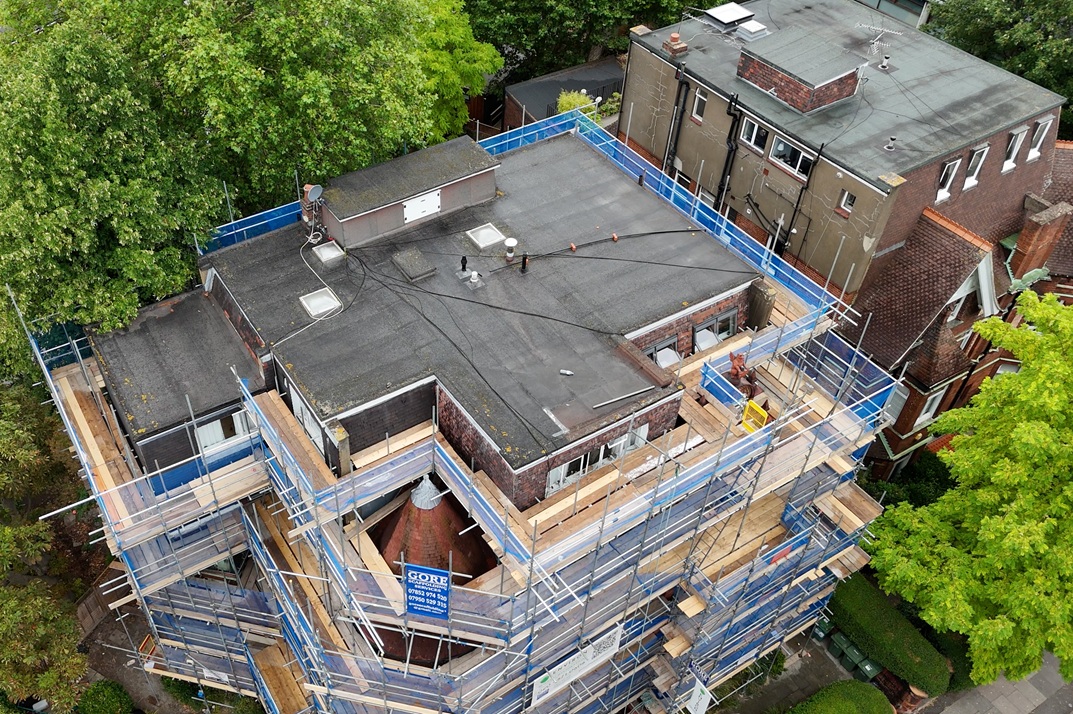
How Long Do Flat Roofs Typically Last?
The lifespan of a flat roof depends on the material used:
- Felt roofing: 10–20 years
- GRP (fibreglass): 20–30 years
- EPDM rubber: 25–30+ years
If your flat roof is approaching these ages, regular inspections become essential.
Flat Roof Warning Signs
1. Persistent Leaks or Water Stains
One of the clearest warning signs is recurring leaks. While a single leak can sometimes be repaired, repeated water ingress often indicates the membrane is failing across a wider area. You may notice water stains on ceilings, damp patches, or peeling paint inside the property.
2. Pooling or Standing Water
Flat roofs are designed with a slight fall to allow water to drain. If water remains on the surface long after rain has stopped, this puts strain on the roofing material. Standing water accelerates wear, increases the risk of leaks, and often signals structural sagging beneath the roof.
3. Cracks, Blisters, or Bubbles
Over time, exposure to UV rays and temperature changes can cause flat roofing membranes to crack, blister, or bubble. These weak points allow moisture to penetrate the layers beneath, leading to hidden rot and insulation damage.
4. Splits Around Edges and Flashings
The edges of flat roofs and areas around vents, skylights, and walls are particularly vulnerable. If you notice splits, lifting, or deterioration in these areas, it often means the roof is no longer sealing properly.
5. Rising Energy Bills
An ageing flat roof often loses its insulating properties. If your heating bills are creeping up or rooms beneath the roof feel colder in winter and hotter in summer, poor roof performance may be to blame.
When Replacement Is the Smarter Choice
If multiple issues are present or repairs are becoming frequent, replacement is often more cost-effective than ongoing patchwork. A professional inspection can determine whether repair or replacement is the best long-term solution.