
- About Us
- Services
- Blog
- Contact
Need a quote?
When homeowners think about roof leaks, they often focus on missing tiles, damaged chimneys, or ageing roofing materials. However, one of the most common sources of roof leaks is an area many people rarely notice: the roof valley.
Roof valleys play a critical role in directing rainwater safely away from your property. Because they handle large volumes of water during every rainfall, they are also one of the most vulnerable parts of any roofing system.
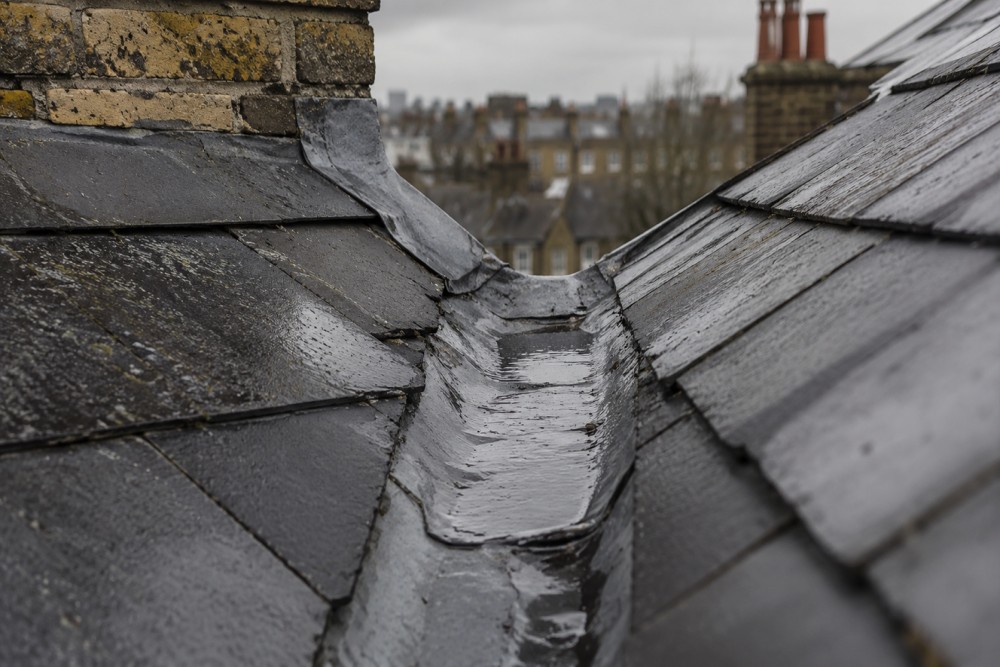

A roof valley is the internal angle where two roof slopes meet. You'll commonly find them on larger properties, extensions, dormers, and more complex roof designs.
Their purpose is simple: collect rainwater from multiple roof surfaces and channel it safely into the guttering system.
Because so much water flows through these areas, even small defects can quickly lead to leaks.
Unlike other parts of the roof that only shed water passing over them, valleys handle concentrated water flow whenever it rains.
Over time, this constant exposure causes wear and tear on:
As materials age, they become more vulnerable to water penetration.
Leaves, moss, twigs, and other debris naturally collect in roof valleys. If this material isn't removed, it can slow drainage and cause water to back up.
Standing water increases pressure on roofing materials and often finds its way through small cracks or weaknesses that would otherwise remain watertight.
This is particularly common on London properties surrounded by mature trees, this is why moss removal and roof cleaning are so important.
Many roof valleys rely on lead to provide a waterproof channel. While lead is extremely durable, it can still crack, split, or become loose over time.
Once the leadwork begins to fail, water can seep beneath surrounding tiles and into the roof structure below.
Because the leak often appears far away from the actual problem, identifying the source can be difficult without professional inspection.
The tiles bordering roof valleys are subject to greater water exposure than those elsewhere on the roof. As roofs age, these tiles can loosen, crack, or shift slightly.
Even small gaps around a valley can allow water to penetrate beneath the roof covering during heavy rainfall.
Roof valley leaks rarely improve on their own. Left untreated, they can lead to:
Regular inspections help identify valley problems before they develop into major roofing issues.
If you've noticed signs of a roof leak but can't identify the source, our roofing team can inspect your roof valleys and surrounding areas to pinpoint the problem and recommend the right repair solution.