
- About Us
- Services
- Blog
- Contact
Need a quote?
Garage roofs and extension roofs often look like smaller, simpler parts of a property, but in reality, they’re some of the most vulnerable roofing areas on any home. In London especially, where rear extensions, side returns, and garage conversions are common, these roof sections often begin to fail much sooner than the main roof.
So why does this happen?
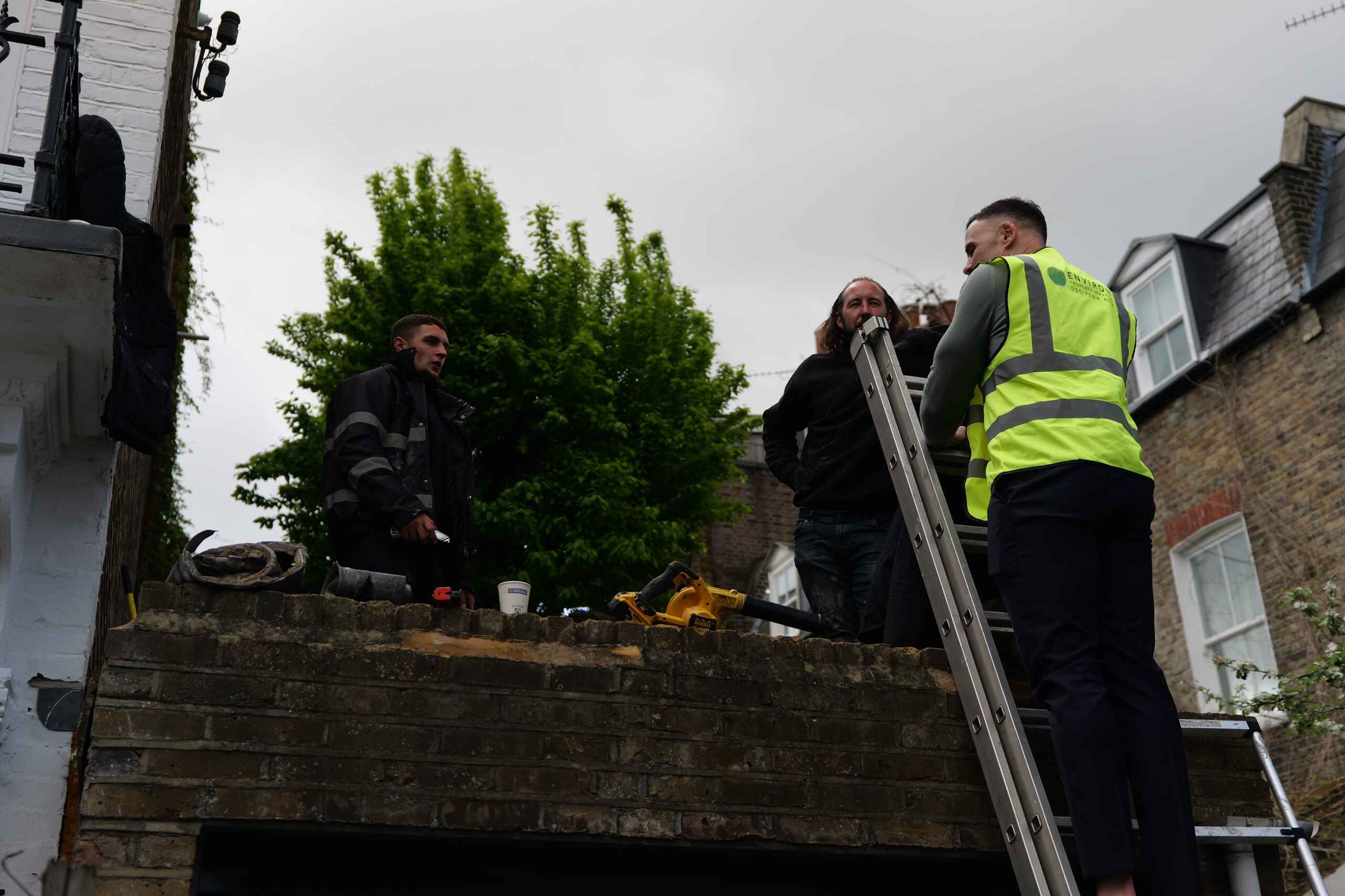

One of the biggest reasons garage and extension roofs fail earlier is that they’re usually built using different roofing systems than the main house. While the main roof may be pitched and tiled, extensions and garages often use flat roofing materials such as felt, fibreglass, or rubber membranes.
These materials can be very effective, but they often have a shorter lifespan than traditional slate or tile roofs, particularly if they were installed many years ago or with budget materials.
Unlike pitched roofs, flat roofs don’t shed water as quickly. Even though they are designed with a slight fall, rainwater can still sit on the surface for longer, especially if drainage is poor or the roof has started to sag.
Over time, this standing water increases wear and tear, weakens the roof covering, and raises the risk of leaks.
Garage and extension roofs are easy to overlook. Because they’re lower down or less visible from the street, homeowners often focus more on the main roof and forget about smaller roof areas until a problem appears.
This means minor issues like cracked felt, blocked outlets, or loose flashing often go unnoticed for longer, allowing damage to worsen.
Not all extension or garage roofs are built to the same standard. Some are added years after the original property was built, and not every build uses the best materials or roofing methods.
Poor detailing around edges, rooflights, walls, and drainage outlets is a common cause of premature failure on extension roofs in particular.
Garage and extension roofs often sit beneath overhanging trees or directly below upper roof slopes. This means they collect more leaves, moss, and debris, which can block drainage and trap moisture on the surface.
Once drainage is compromised, leaks and material breakdown tend to follow quickly.
Because these roofs often fail sooner, regular inspections and early repairs are especially important. Catching issues early can significantly extend the lifespan of a garage or extension roof and help avoid internal water damage.
If your garage or extension roof is ageing, leaking, or showing signs of wear, professional advice can help determine whether a repair will solve the issue, or whether a more durable replacement is the better option.
If your garage or extension roof is showing signs of wear, we can inspect it and recommend the most effective solution before the damage gets worse.