
- About Us
- Services
- Blog
- Contact
Need a quote?
Roof repairs are often the most sensible and cost-effective way to deal with roofing problems. A slipped tile, damaged flashing, or a small flat roof leak can usually be fixed without needing major work. But there comes a point where repeated repairs stop being practical, and a full roof replacement becomes the better long-term option.
For many London homeowners, the challenge is knowing when that point has been reached.
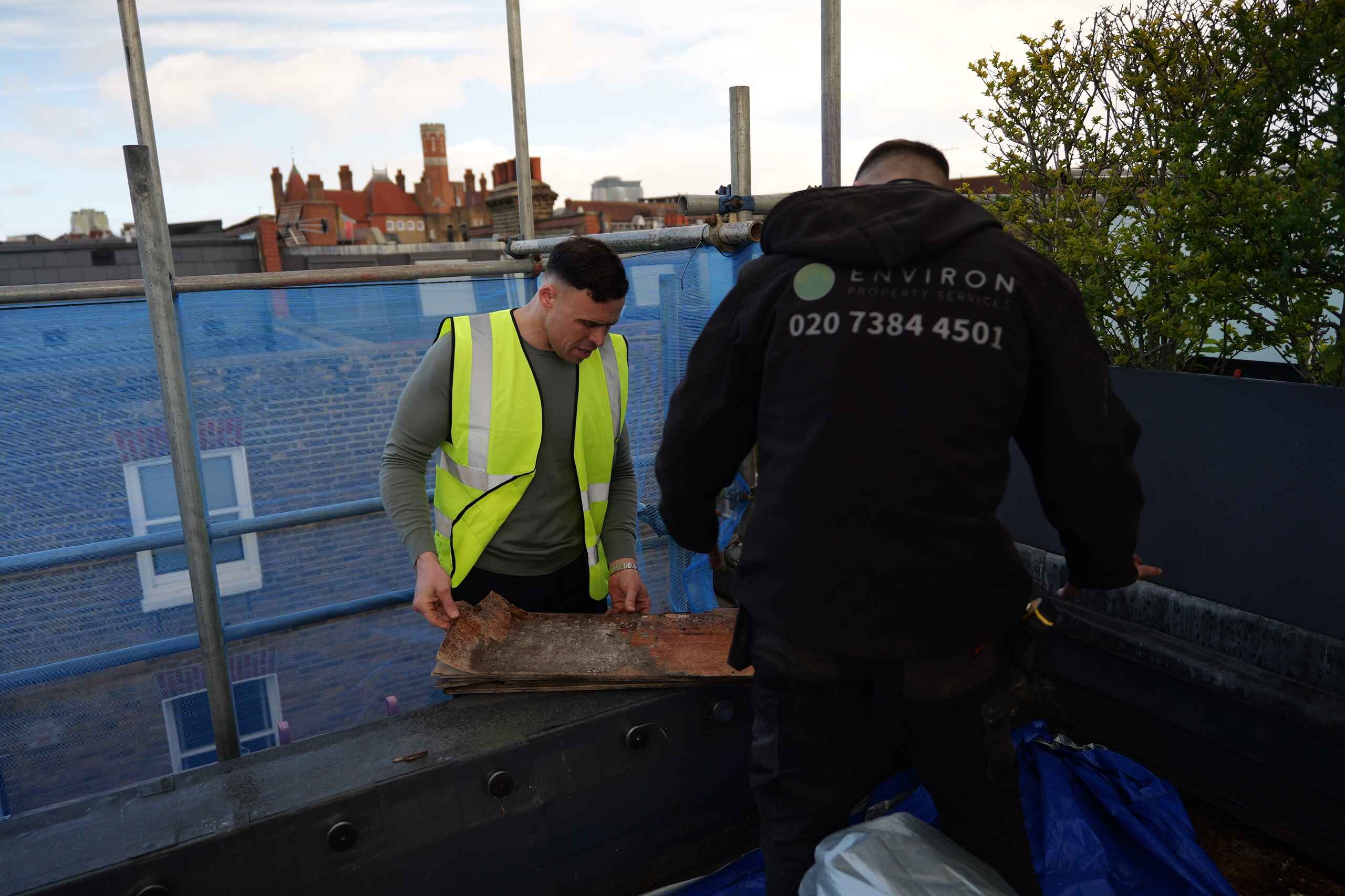

One of the clearest signs a repair is no longer enough is when problems keep coming back. If you’ve already had multiple fixes over the last few years, and new leaks or faults keep appearing, it may be a sign the roof is deteriorating more widely.
A one-off repair is normal. Ongoing patchwork across different areas of the roof usually means the overall structure or covering is nearing the end of its lifespan.
Every roofing system has a life expectancy. Tiles, felt, flat roof membranes, flashing, and underlay all wear down over time. If your roof is several decades old and repairs are becoming more frequent, replacement often becomes more cost-effective than continuing to patch ageing materials.
This is especially true for older London homes, where original roofing materials may already be well beyond their expected service life.
A small leak is often repairable. But if roof problems are starting to affect ceilings, loft insulation, plaster, or internal walls, the damage may be more widespread than it first appears.
Water ingress that repeatedly finds its way inside the property often points to deeper roofing issues rather than a single isolated fault.
Repairs can fix surface-level damage, but they cannot always solve structural issues. If the roof is sagging, timbers are rotting, or large sections have become unstable, a full replacement is usually the safer and more practical solution.
Ignoring structural deterioration can lead to more extensive and expensive problems over time.
An ageing roof can also affect how well your home retains heat. If insulation has been compromised by leaks or the roof is no longer weatherproof, you may notice colder rooms and rising energy bills.
A new roof often improves both protection and energy efficiency, making it a worthwhile long-term investment.
A professional roofing inspection is the best way to understand whether a repair is still worthwhile or whether a new roof would provide better value and reliability.
In many cases, replacing a failing roof early prevents years of repeated repair bills, internal damage, and uncertainty. If your roof is showing multiple signs of age or repeated failure, it may be time to stop patching and start planning properly.
If you’re unsure whether your roof needs another repair or a full replacement, our team can assess its condition and give you honest, practical advice.