
- About Us
- Services
- Blog
- Contact
Need a quote?
For many London homes, especially older Victorian and Edwardian properties, chimneys are more than just architectural features, they play a key role in keeping your roof structurally sound and weatherproof.
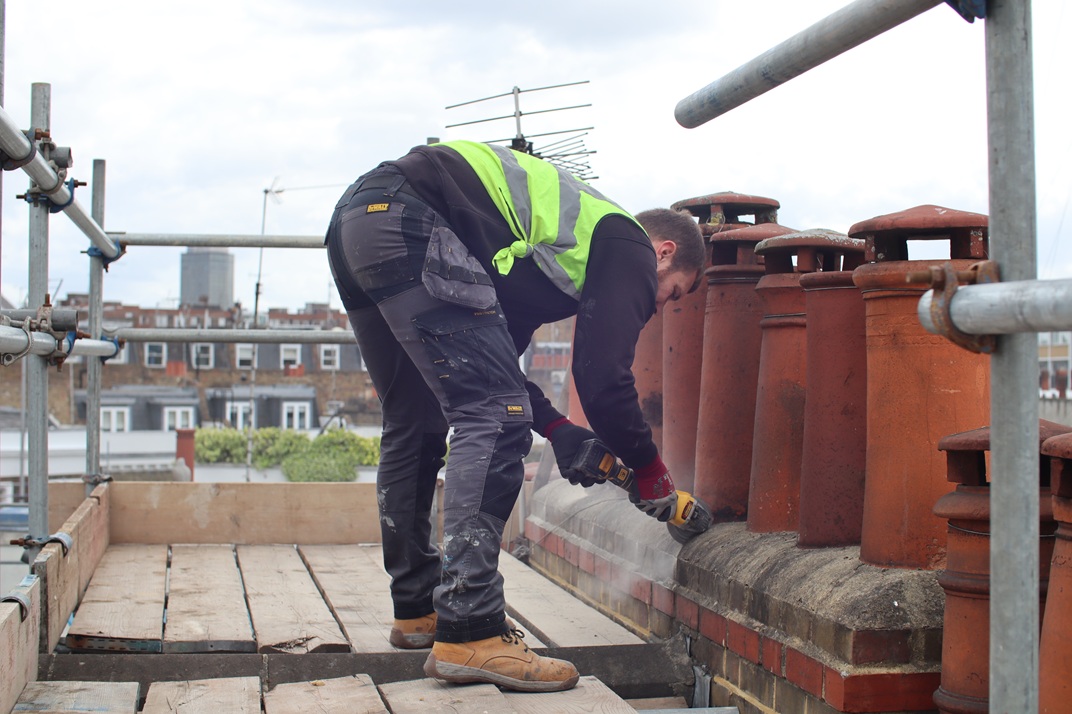

Yet chimneys are often overlooked during routine maintenance. Because they sit above the roofline and face constant exposure to wind, rain, and temperature changes, they tend to deteriorate faster than other parts of your roof. And when chimney issues begin, they quickly cause problems elsewhere.
Here are the most common chimney problems London homeowners face, and why regular maintenance or chimney repairs are essential.
Many London properties still have chimneys built with older mortar that breaks down over time. Weather exposure, frost, and pollution all contribute to mortar decay. When the mortar between the bricks begins to crumble, gaps form, allowing water to seep inside. Left untreated, this can lead to structural instability, internal damp, and even falling masonry.
Repointing, renewing the mortar, is a simple fix when caught early, but ignoring it can lead to major repairs.
Chimney flashing is one of the most common sources of roof leaks. Its job is to seal the area where the chimney meets the roof, preventing water from running inside. In London’s windy, rainy climate, flashing can become loose, cracked, or corroded.
When flashing fails, water penetrates the roof space, damaging insulation, beams, and ceilings. Often, homeowners think they have a roof leak when in fact the chimney is the real culprit.
Older brick chimneys often shift slightly over time due to foundation settling, vibration from traffic, or strong winds. Even slight movement can crack brickwork, loosen tiles around the chimney, and create gaps that allow water and draughts inside.
A leaning or unstable chimney poses a serious safety risk and should be inspected immediately.
Chimneys are prime entry points for water. Cracks in the crown, damaged pots, worn leadwork, and poor pointing can all allow moisture to seep inside the chimney breast. Homeowners might notice peeling paint, musty smells, or damp patches on chimney breast walls.
Without maintenance, this damp can spread into adjoining rooms and attic spaces.
Chimneys are attractive nesting spots for birds, particularly in spring. Nests block ventilation, cause smoke issues for working fireplaces, and can trap moisture.
Installing bird guards or having a periodic sweep prevents these problems.
Regular inspections and timely repairs keep your chimney watertight, structurally sound, and safe. Since many roof leaks start at the chimney, maintaining it properly protects your entire roof and your home from costly long-term damage.
It depends on the construction, but the minimum weight a flat roof must be capable of bearing is 300lbs. This refers to a concentrated weight where a load is positioned on just one area of the roof. So, for example, a commercial flat roof can approximately support a 300lb HVAC unit in a 2.5×2.5ft single space.
Over time, damaged or unmaintained roofs can become entry points for pests such as birds, squirrels, or insects. These intruders can cause further damage, contaminate insulation, and even create fire hazards by nesting near electrical components.
If your roof is over 20 years old, shows visible signs of damage, or has caused recurring issues indoors, it’s time to consult a professional roofer. They can assess the roof’s condition, identify hidden dangers, and advise whether repairs or full replacement are necessary.
Ignoring the risks of an ageing roof can lead to expensive repairs and even compromise your safety.
Regular roof inspections, timely maintenance, and professional assessments ensure your home remains secure, energy-efficient, and free from the hidden hazards that old roofs often conceal.