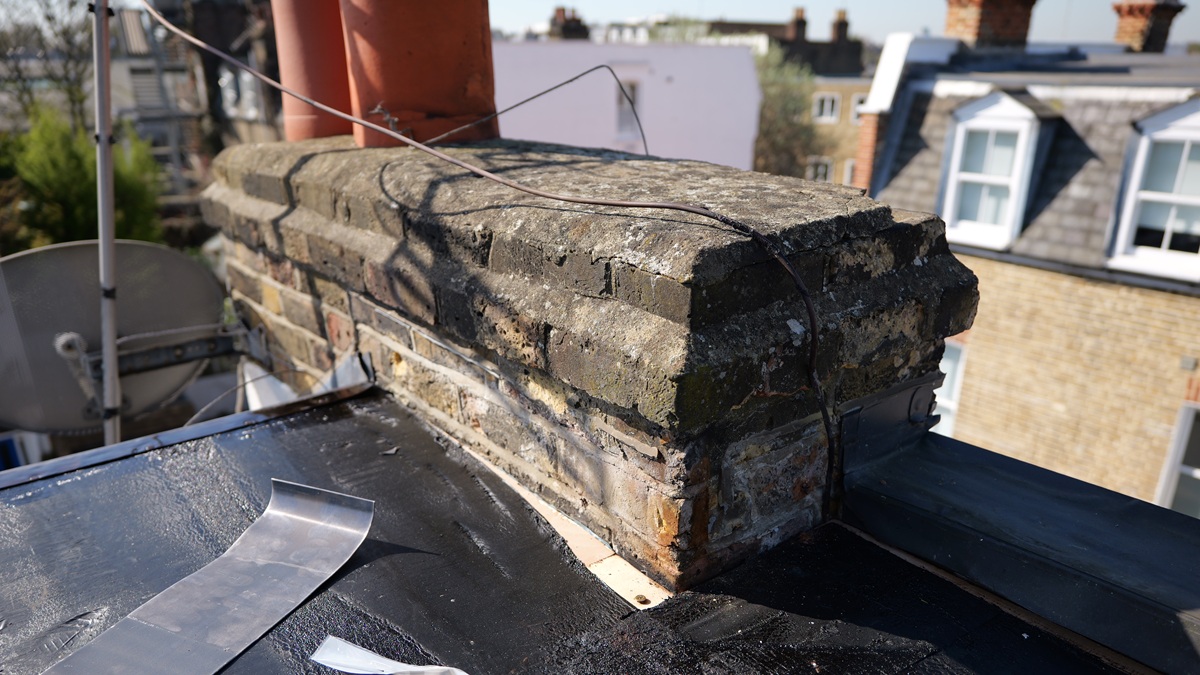
What Is Lead Flashing?
Lead flashing consists of sheets or strips of lead installed at roof joints to direct rainwater away from areas that would otherwise be vulnerable to leaks. Lead has traditionally been used for this purpose because it is durable, flexible and able to withstand decades of exposure to the elements.
However, even well-installed leadwork doesn't last forever.
Weathering and Age
One of the most common reasons lead flashing fails is simply age. Lead is extremely durable, but years of exposure to rain, sunlight and changing temperatures can eventually cause deterioration.
London roofs experience repeated heating and cooling throughout the year. As temperatures change, lead naturally expands and contracts. If the flashing cannot move correctly, this repeated movement can eventually contribute to cracking or splitting.
Cracking and Splitting
Small cracks in leadwork can be difficult to see from ground level but may be enough to allow water underneath the roofing materials.
Once moisture begins entering through damaged flashing, it can travel along roof timbers before becoming visible inside the property. This means the damp patch you notice indoors may be some distance away from the actual defect.
Loose or Lifting Flashing
Strong winds, deterioration of surrounding mortar or incorrect fixings can cause flashing to lift away from the roof or wall.
Even a small gap creates an entry point for wind-driven rain. Chimneys are particularly vulnerable because their flashing is exposed on several sides and sits at one of the busiest drainage points on the roof.
Poor Installation
Leadwork needs to be installed correctly to allow for natural movement while maintaining a watertight seal. Sections that are incorrectly sized, fixed or detailed may fail much sooner than expected.
This is why recurring leaks around chimneys, valleys or roof junctions should be properly investigated rather than repeatedly sealed as a temporary fix.
What Should You Do About Damaged Lead Flashing?
The right solution depends on the extent and location of the damage. Minor defects may be repairable, while badly deteriorated or incorrectly installed leadwork may need replacing.
It's important to address the underlying problem rather than simply applying sealant over a crack. A temporary patch may stop water briefly without providing a reliable long-term solution.
If you've noticed damp near a chimney, water staining after heavy rain or visible problems with your leadwork, arranging for professional chimney works can identify whether the flashing is responsible.
If you suspect your lead flashing is failing, our roofing team can inspect the affected area and recommend the most appropriate repair to keep your property watertight.