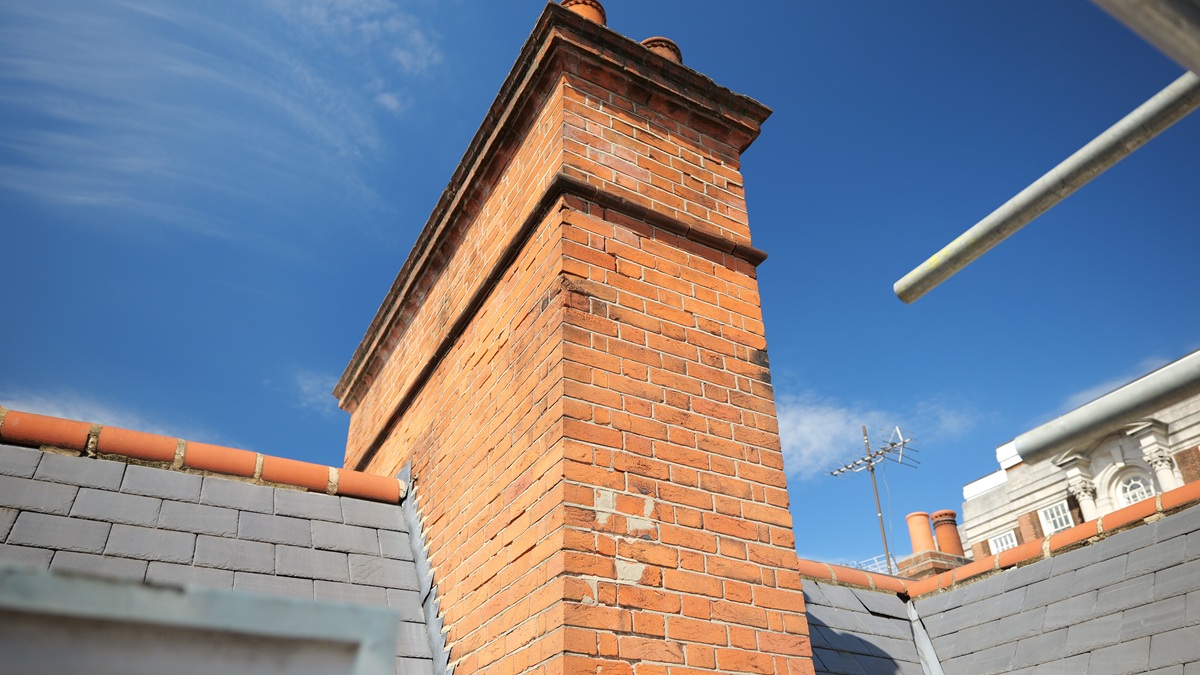
What Is Roof Repointing?
Repointing is the process of removing loose or deteriorated mortar from joints and replacing it with suitable new mortar.
On and around a roof, this can include areas such as:
- ridge and hip tiles
- chimney stacks
- brickwork above the roofline
- mortar joints around certain roof details
The aim isn't simply to make the roof look better. Sound mortar helps keep roofing components secure and reduces opportunities for water to penetrate vulnerable areas.
What Causes Roof Mortar to Deteriorate?
Roof mortar is constantly exposed to the weather. Rain, wind and changing temperatures gradually cause it to deteriorate.
Freeze-thaw cycles can be particularly damaging. Moisture enters small cracks in the mortar before expanding when temperatures fall below freezing. Over repeated cycles, those cracks can become larger, and sections of mortar may eventually loosen or fall away.
Older mortar can also simply reach the end of its useful life.
Cracked or Missing Mortar
Visible cracking is one of the clearest indications that repointing may be required. You might also notice small pieces of mortar in gutters or on the ground following bad weather.
Missing mortar around chimney brickwork should also be investigated. Gaps between bricks can allow moisture into the chimney structure, accelerating deterioration.
Loose Ridge or Hip Tiles
Traditional ridge and hip tiles may be bedded and pointed with mortar. As that mortar deteriorates, the tiles can become loose.
This isn't just a waterproofing concern. Loose roof tiles can become dangerous during high winds and should be assessed promptly.
Damp Around the Chimney
If mortar joints in a chimney stack have deteriorated, rainwater may penetrate the masonry. Inside the property, this can sometimes appear as damp staining around the chimney breast or within the loft.
However, chimney leaks can also originate from damaged flashing or surrounding roof coverings, so it's important to establish the actual cause before repairs begin.
When Should You Arrange Roof Repointing?
Repointing is most effective when deterioration is caught before it causes wider damage. If mortar is visibly cracked, crumbling or missing, it's worth arranging an inspection rather than waiting for a leak to develop.
Not every roof requires the same approach, and modern dry ridge systems do not rely on mortar in the same way as traditionally installed ridge tiles. A professional roofer can determine which areas require attention and whether repointing is the appropriate roof repair.
If you've noticed deteriorating mortar, loose ridge tiles or problems around your chimney, our team can assess the roof and carry out the necessary repairs before minor deterioration becomes a bigger problem.