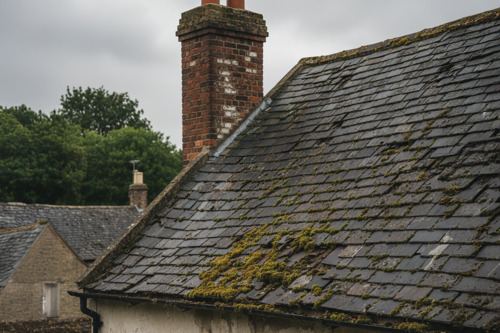
Structural Weakness
One of the most serious risks of an old roof is structural weakness.
Timber supports can rot, nails can corrode, and tiles can become brittle. Even minor damage, if left unaddressed, can compromise the roof’s integrity, increasing the risk of collapse or significant repair costs.
Regular roof inspections are key to spotting early signs of structural problems.
Water Damage and Damp
Old roofs are more susceptible to leaks, which can lead to water damage inside your home. Water ingress may cause ceilings to stain, plaster to crumble, and wooden structures to warp.
Persistent damp also creates an ideal environment for mould and mildew, which can trigger respiratory problems and affect overall indoor air quality.
Moss, Algae, and Vegetation Growth
Moss and algae are common on London roofs, especially in shaded or damp areas. While they may appear harmless, these growths retain moisture against the tiles, accelerating wear and increasing the risk of leaks. In severe cases, vegetation can lift tiles or create gaps, allowing water to penetrate the roof structure.
Insulation and Energy Loss
An old roof can also hide energy inefficiencies. Gaps, cracks, or degraded insulation increase heat loss in winter and reduce cooling efficiency in summer. This not only raises energy bills but also puts extra strain on your heating and cooling systems. Replacing or upgrading an ageing roof can dramatically improve energy efficiency.