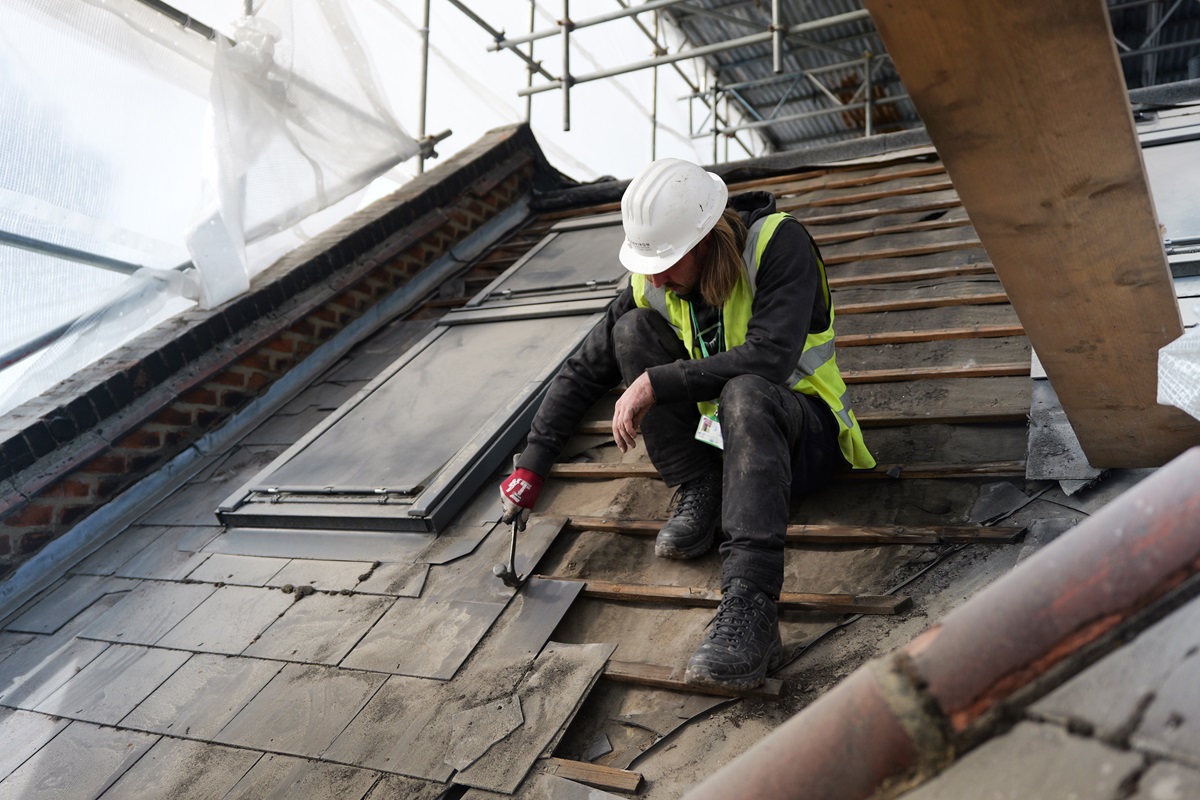
The Problem Might Not Be the Tiles
Roof tiles provide the first line of defence against the weather, but there are several other components working beneath and around them.
A leak could be caused by damaged underlay, deteriorated battens, failed flashing or a problem around a chimney or roof valley. If the existing tiles remain in good condition, they may be carefully removed to access the affected area and then reused once the repair has been completed.
This can reduce unnecessary waste while allowing the underlying problem to be properly addressed.
Repairing Damaged Underlay
Beneath your tiles sits a layer of roofing underlay, which provides additional protection against moisture.
Older underlay can deteriorate, tear or become damaged over time. In some situations, tiles can be temporarily lifted so that a localised section of underlay can be repaired or replaced.
The original tiles can then be reinstated if they're still in suitable condition.
What About Damaged Roof Battens?
Roof battens are the horizontal lengths of timber that support the tiles. Water ingress can cause sections of timber to deteriorate, particularly if a leak has gone unnoticed for a long period.
Localised batten repairs may be possible without replacing the entire tiled covering. Again, the existing tiles can often be removed carefully and reused.
Flashing Can Be the Real Cause
Leaks around chimneys, walls, valleys and other roof junctions are frequently caused by failing flashing rather than damaged tiles.
Repairing or replacing lead flashing can therefore resolve the problem without requiring widespread tile replacement.
Correct diagnosis is important. Simply replacing nearby tiles won't solve a leak if water is actually entering through damaged leadwork.
When Do Roof Tiles Need Replacing?
Tiles should generally be replaced if they're cracked, broken, badly weathered or no longer providing adequate protection.
If damage is widespread across an ageing roof, repeatedly removing and reinstalling old tiles may also stop being cost-effective. In this situation, a larger repair or new roof could offer better long-term value.
Get the Cause of the Problem Checked First
The important thing is not to assume that a leaking roof automatically means new tiles. A professional inspection can identify exactly where water is entering and determine which components genuinely need attention.
If you're experiencing roofing problems, our roof repair team can assess the damage and recommend a solution that retains existing materials wherever it's practical to do so.